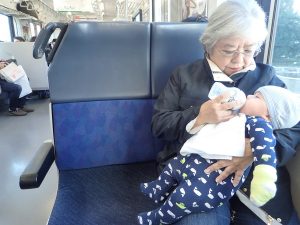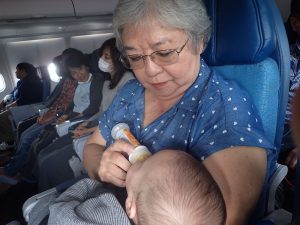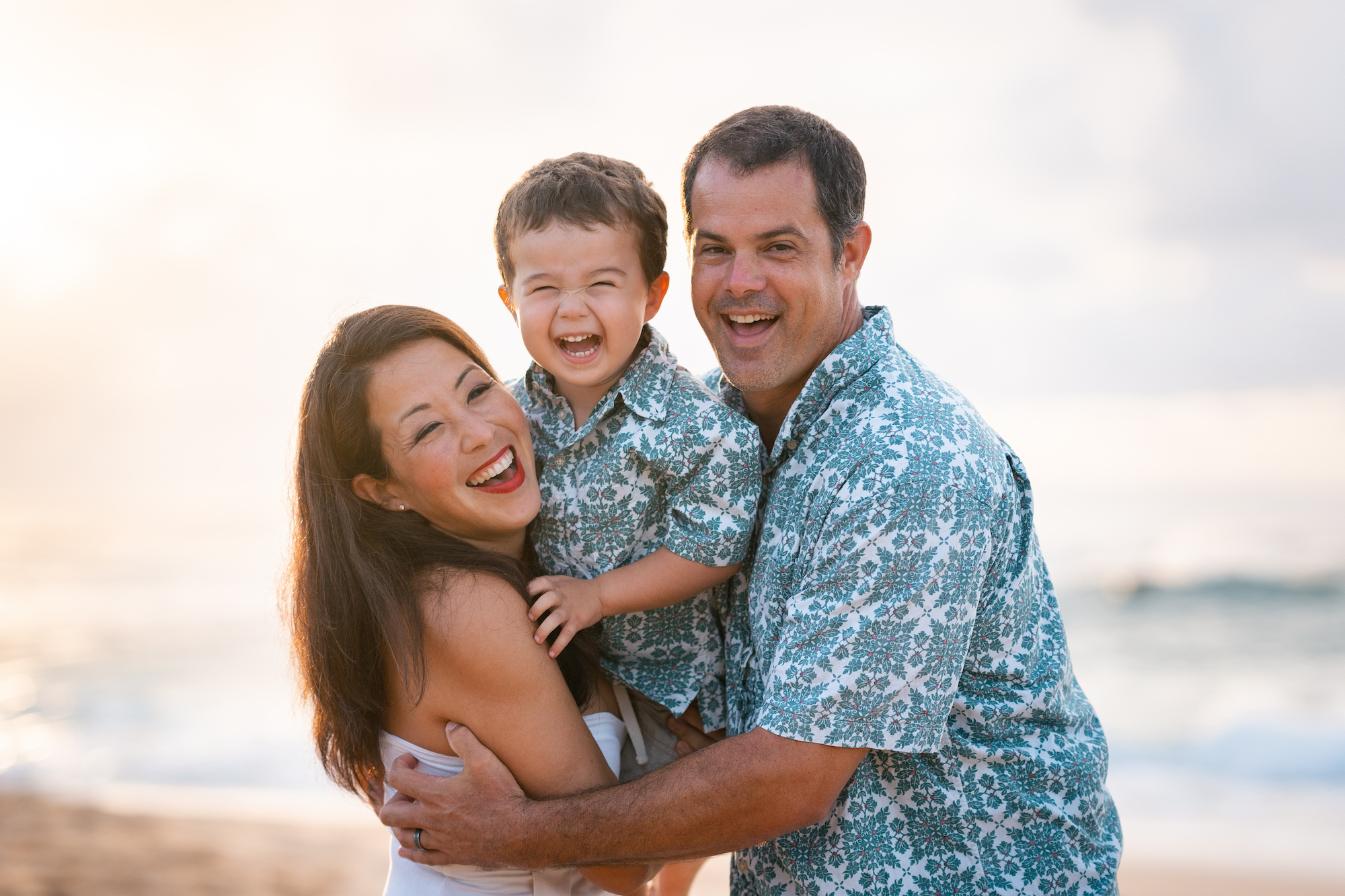
The idea of traveling with a newborn had never sounded appealing.
I imagined having to walk up and down the narrow airplane aisles, cradling a screaming baby and apologizing to a very annoyed coach class.
But my husband was going to Japan to speak at FoodEx, a huge trade show for the food and beverage industry, and invited me to tag along.
With the baby.
Hmm.
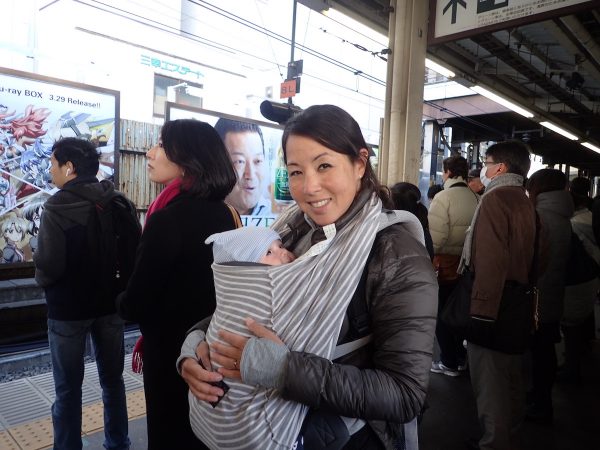
Landon would be almost four months old. We’d be there in March, when the temperatures would hover around the 40s. I would be back at work part time.
Did I mention I’d be traveling with an infant?
It had been four years since I’d been to Japan. And this might be my last international trip for awhile, until Landon gets a little older and can actually appreciate it.
So I said yes. Sure. Why not.
The deal was, though, I’d take my mom with me. I needed someone to help while my husband worked. I couldn’t (wouldn’t) travel with Landon alone.
Traveling with a baby wasn’t going to be easy. (I’ll blog about this later.) We already knew this. So we planned on just five days in Tokyo, with the option — maybe — of spending the day somewhere outside of the city. Maybe Kyoto. Maybe Kamakura. We’d just see how it went.
I’m not going to lie: it was challenging, even with a perfectly behaved baby. (Which he was.) We were back at our hotel in the afternoon and rarely ventured out at night. Still, we managed to pack in a lot of great experiences — it was my mom’s first time to Japan — in less than a week.
Here are some of the highlights:
Staying in Shinjuku
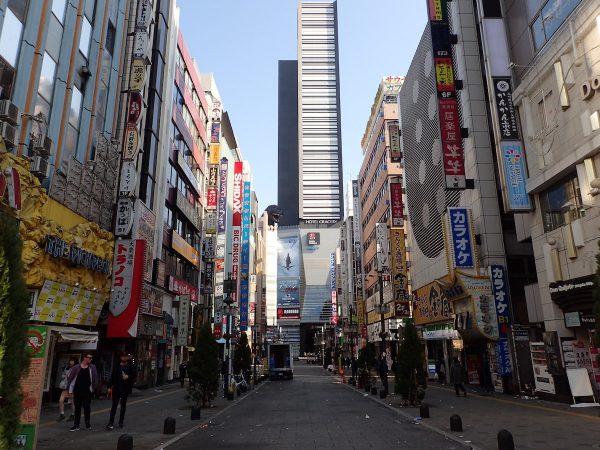
On the recommendation of a friend who travels to Tokyo several times a year, we booked a room at the Hotel Sunroute Plaza Shinjuku, which is just a couple of blocks away from Shinjuku Station, the busiest transportation hub in the world used by more than 3 million people a day. (It’s hard to imagine, but it’s true.) I liked the convenient location, the proximity to restaurants and a big shopping complex, and the fact that every floor had coin-operated laundry facilities. This is huge if you’re trying to pack light.
Shinjuku, itself, isn’t the most attractive ward of Tokyo. It’s busy, crowded and, in some parts, dirty. It’s the administrative seat for the government of Tokyo — but it also boasts Kabukicho, Tokyo’s red-light district. The Don Quijote there is practically a sex shop!
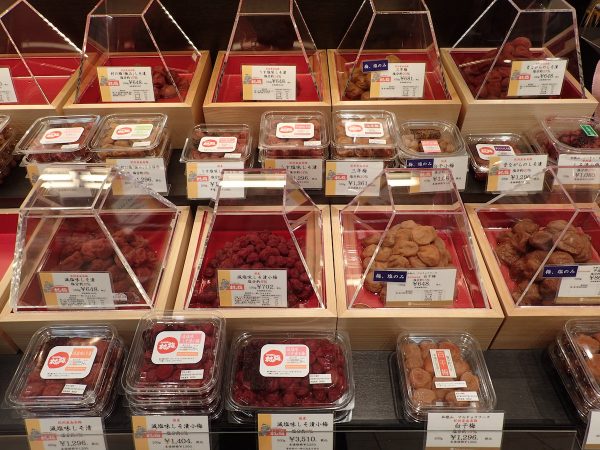
The basement floor of Takashimaya Department Store boasts a variety of food items, including this vendor selling all sorts of ume.
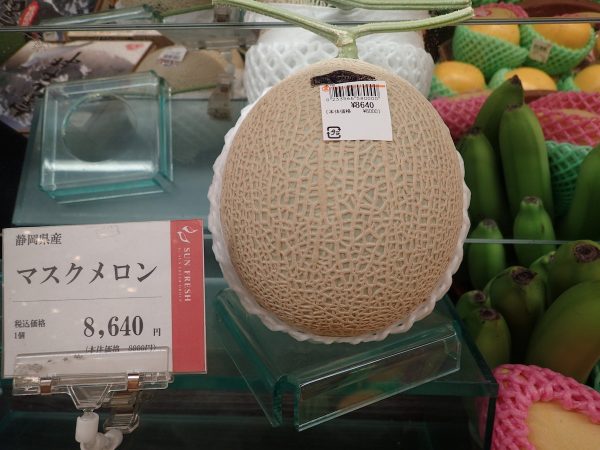
It’s always fun to see the expensive fruits sold at these department stores.
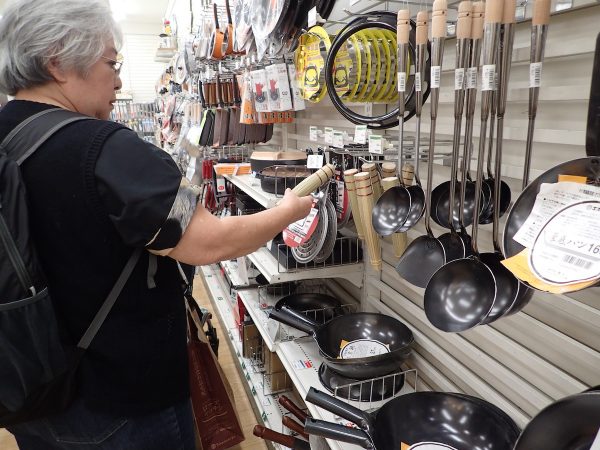
Takashimaya Times Squares has a Tokyu Hands, my favorite lifestyle store in Japan.
You can spend an entire day at Shinjuku Station — and not go anywhere! A new shopping mall called NEWoMan opened recently, with a mix of boutiques, restaurants, cafés and bakeries. And near the station’s south exit is Takashimaya Times Square, a combination of the famous Takashimaya Department Store and a mall. Takashimaya has 15 floors, including the popular food basement common to all Japanese department stores. We found — and ate — ume, waffles, tempura, chocolates, even dessert vinegar. (Yes, flavored vinegar you sip.)
There’s even a Tokyu Hands here, my all-time favorite shop in Tokyo. This chain focuses on hobbies, home improvement and lifestyle products. I could spend all day browsing the interesting kitchen utensils and mechanical pencils. Seriously.
Mister Donut
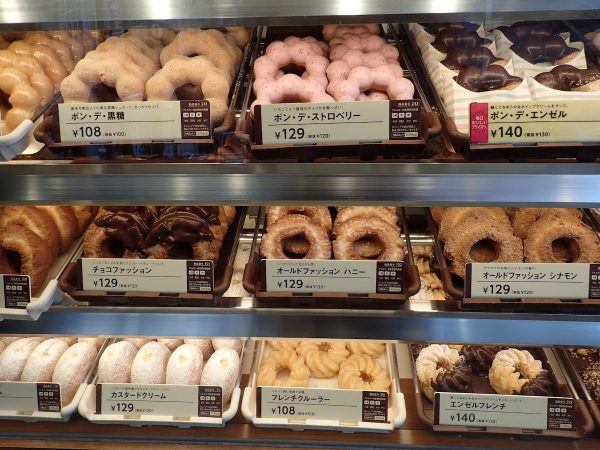
You can’t visit Tokyo without visiting a Mister Donut.
Trust me. You’ll go once — and you’ll make a point to go back every single time you’re in Japan. Maybe every single day you’re there. (I’ve actually done that.)
Mister Donut is a donut chain that started in the United States in 1956 and is now headquartered in Japan, where it has more than 1,300 stores. The signature doughnut here is the pon de ringu, a ring-shaped mochi doughnut that’s super soft and topped with a sugary glaze. (Some are creme-filled, too.) But honestly, the plain glazed yeast and old-fashioned doughnuts are incredible.
We walked a mile from our hotel in 45-degree weather just for a doughnut. OK, six of them.
Quick Stop at Joshuya
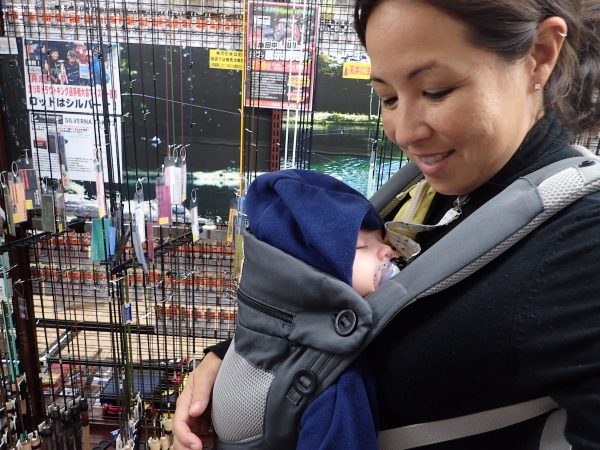
Inside Joshuya, a fishing store in Shibuya
We had a couple of hours to kill before my husband had to go to a meeting in Ginza, so we caught the metro to Shibuya to browse
Joshuya, a three-story fishing shop. If you love fishing — saltwater, fly fishing, freshwater — you’ll love this store, which sells everything from rods to crab traps to lures to fishing vests. I mean, whatever you need — or never thought you needed — you can find here.
Sensō-ji and Nakamise-dori
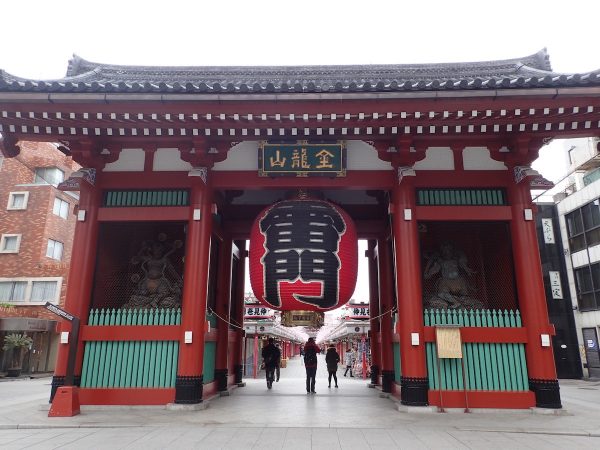
I’m not a huge fan of temples, personally, but I do love the shops that lead up to many of the temples in Tokyo.
For example, Asakusa is home to Tokyo’s oldest temple, Sensō-ji, and it’s a quick 20-minute train ride from Shinjuku. (As opposed to a three-hour trip on the shinkansen to Kyoto.) The temple grounds are beautiful and picturesque. But I love the lively Nakamise-dori that approaches the temple. The 80-plus shops here sell everything from furoshiki (traditional Japanese cloth wrap) to freshly made senbei.
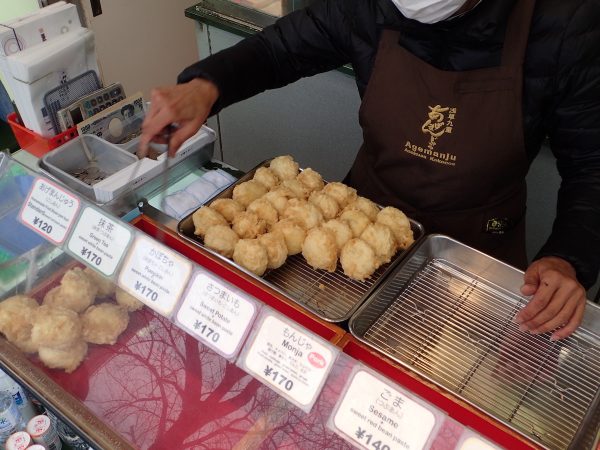
Agemanju is the specialty here.
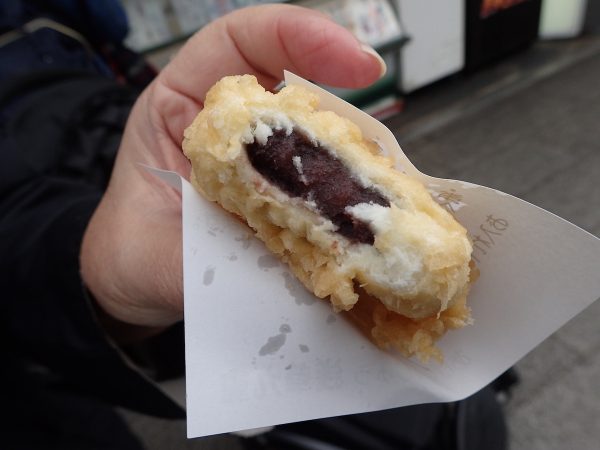
Inside an agemanju.
The speciality here, though, is the agemanju, or deep-fried manju. Manju are small, round, steamed cakes with a sweet filling, often
anko (red bean paste). The cakes here are coated in a tempura batter and deep-fried, giving it a nice, crunchy texture. While anko is the most common (and popular) filling, you can get these filled with seseame, matcha, kabocha pumpkin, sweet potato and custard. They cost about 100 to 150 yen (or around $1.25 each).
Ginza on Sunday
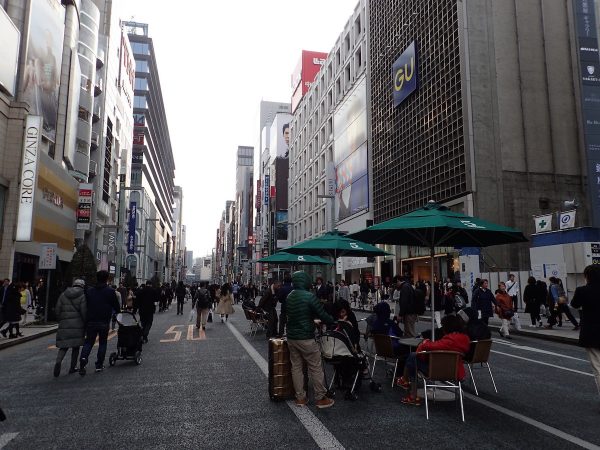
Sunday morning in Ginza.
If you’re in Tokyo on a Sunday, this is the day you should hit the shopping district of Ginza.
The main street — Chuo — is closed to vehicles on Sundays, turning the street into one big sidewalk for shoppers. We leisurely strolled down the main drag, wandering into some of the area’s popular shops including Mitsukoshi Department Store and UNIQLO. Though it was crowded, it didn’t feel that way because of all walking space. I wouldn’t venture here on any other day.
Kappabashi-dori
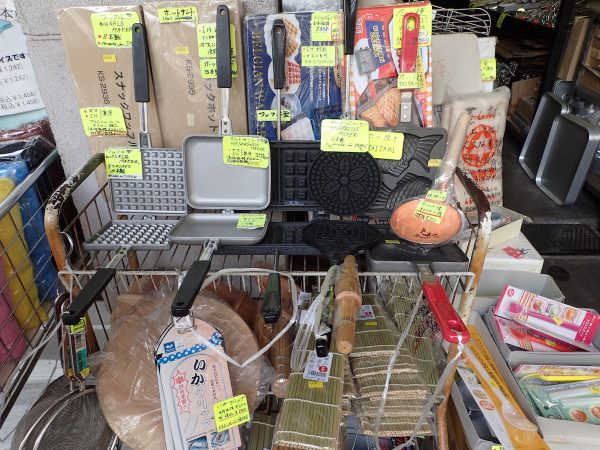
Halfway between Ueno and Asakusa is Kappabashi-dori, or Kitchen Town. This area is populated with shops that supply Tokyo’s restaurant trade, selling knives, kitchen utensils, rice bowls, furniture, ovens and the plastic display food you see in nearly every restaurant window.
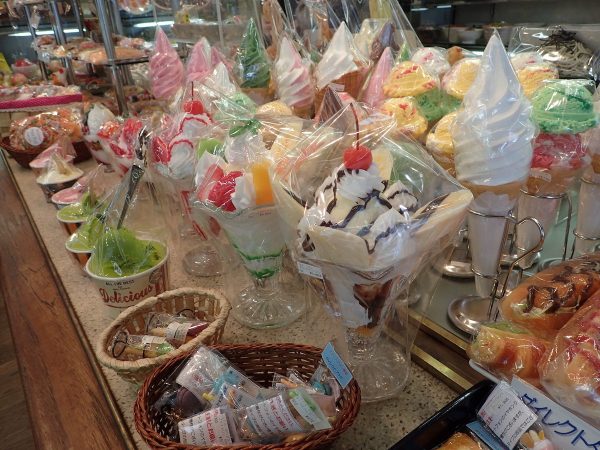
Plastic food FTW!
What you won’t find? Tourists.
Ueno’s Ameya Yokocho
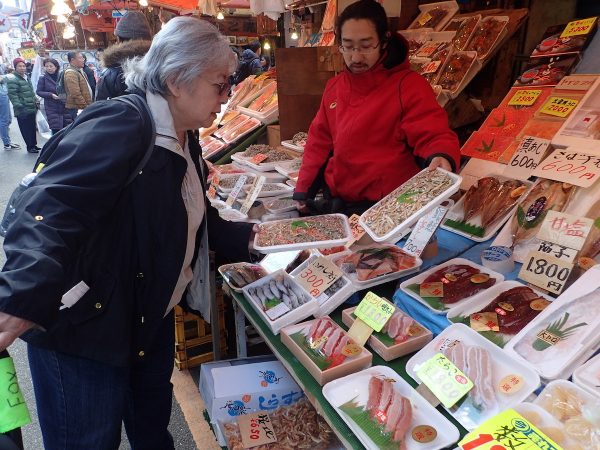
It’s fun to walk around the market streets in Tokyo, particularly Ameya Yokocho (or Ameyoko) right outside Ueno Station. It runs about half a mile along the tracks of the Yamanote Line, the former site of a black market for American goods. Today, there are stalls — and hawkers — selling backpacks, perfume, running shoes, watches, toys, fresh fruit, spices and candy. There are restaurants here, too.
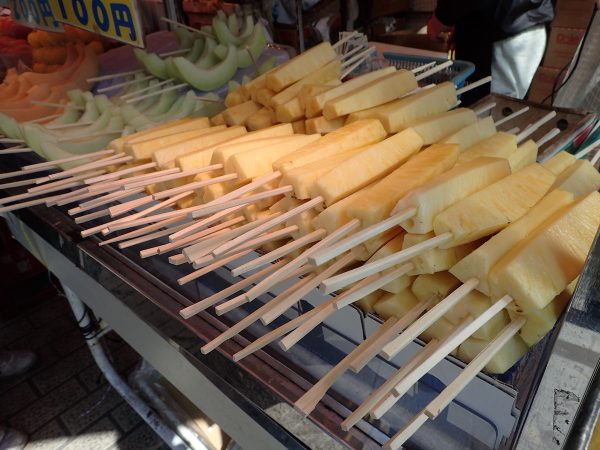
I love fresh fruit on sticks!
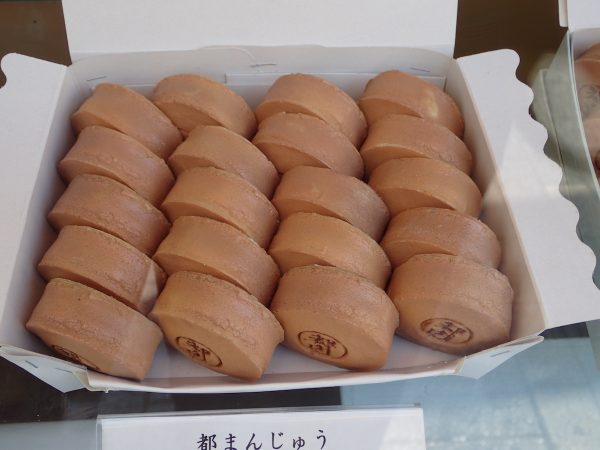
These special manju filled with lima bean paste are only found here.
My mom enjoyed browsing the shops here, buying dried scallops from a vendor who reduced the price by $10 USD. He said he had just harvested the scallops the day before. Right. And dried them in a day. OK. Sure. (She bought a bag, anyway.)
See the Sakura
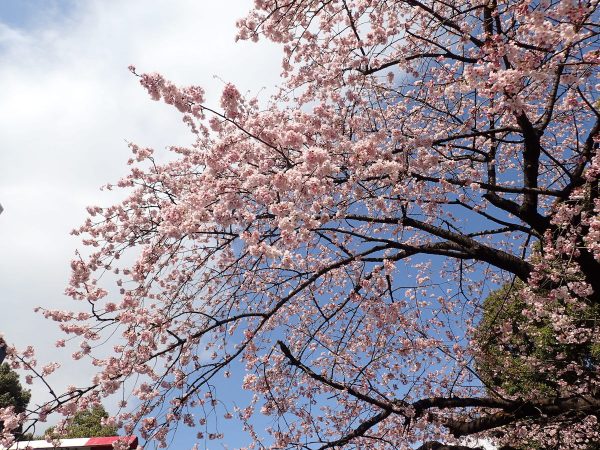
Cherry blossom trees bloom starting from the end or March through early May in Japan. I didn’t think we’d see any — until we walked through the 133-acre Ueno Park and saw some early-blooming trees! We really lucked out.
In Japan, there’s a traditional custom called hanami, the viewing of the transient beauty of the sakura flowers. In modern times, this custom is celebrated by having an outdoor party or picnic beneath the cherry blossom trees. Paper lanterns are hung at this park during the height of the sakura season. These picnics involve eating, drinking and playing music. It was too cold for us to even sit for longer than 10 minutes here. We admired the trees, then prompted hailed a cab and headed back to the hotel.
Eat Monjayaki
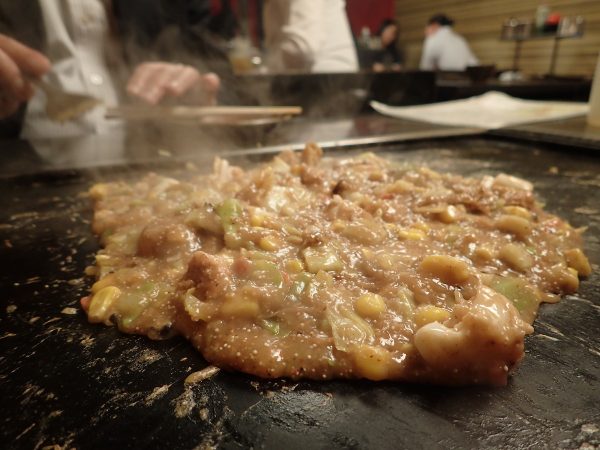
My husband spent the last year traveling to Japan for work. And every time he’s been there, he’s had monjayaki.
Monjayaki — or monja — is a type of Japanese pan-fried batter very similar to okonomiyaki. Various chopped ingredients — onions, seafood, cabbage, carrots, chicken — are fried on a grill then mixed with a kind of gravy and often topped with cheese. You eat directly from the grill using small spatulas. The best parts are the crispy bits that caramelize. It’s a very interactive way to eat.
Kamakura
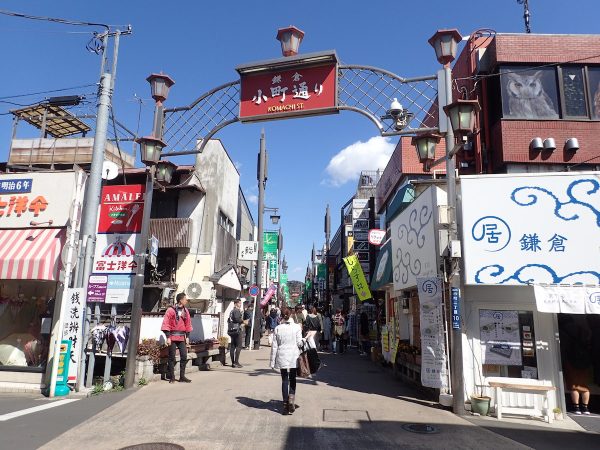
It was too hard lugging around a stroller, wearing a 20-pound infant and trying to find warm places to feed him that we decided to ditch plans to travel to Kyoto and spend the day in the charming coastal town of Kamakura.
Kamakura, in Kanagawa Prefecture, is about an hour train ride from Shinjuku. It was the former de facto capital of Japan as the seat of the Shogunate and the Regency during the Kamakura Period. It boasts a lot of beautiful and important temples — but that’s not why we were there.
I wanted to take my mom to Komachi-dori, a street that runs from Kamakura Station to Kamakura Hachiman-gu. This street market is lined with more than 250 restaurants, boutiques, cafés and stores selling souvenirs.
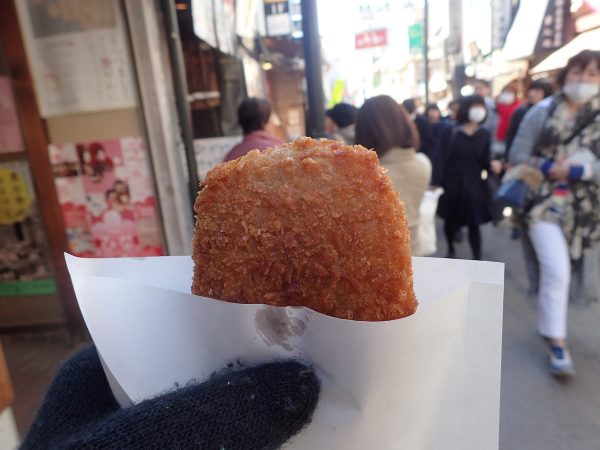
We ate everything on this street, from croquettes (shown here) to meat pies.
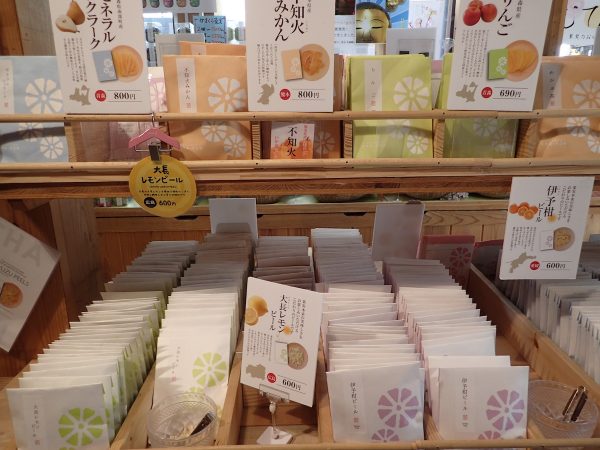
Beautifully packaged dried fruits.
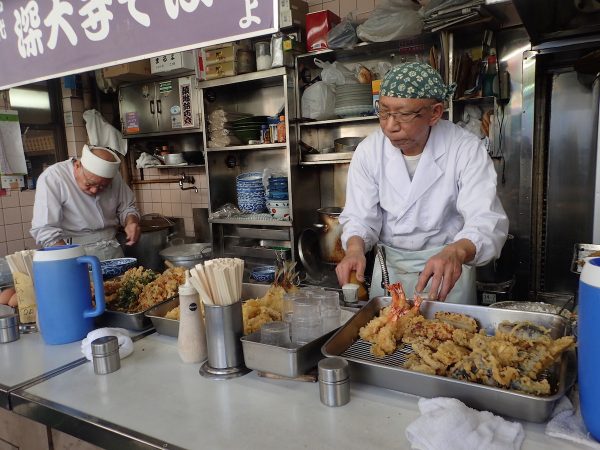
The iconic Tsukiji Fish Market was supposed to move in 2016 to Toyosu in preparation for the 2020 Summer Olympics. But so far, it’s still in its original location, walking distance from Ginza. (The surrounding retail market, though, is supposed to stay.) The market is the biggest wholesale fish and seafood market in the world, believe it or not, and the public is welcome to view the early-morning auction (limited attendance) or browse the market itself (opens after 10 a.m.).
My mom wasn’t that interested in the actual fish market, but she really enjoyed the shops and restaurants that surround it. There were stalls selling knives, dried seafood, spices, teas, fresh produce and hot foods.
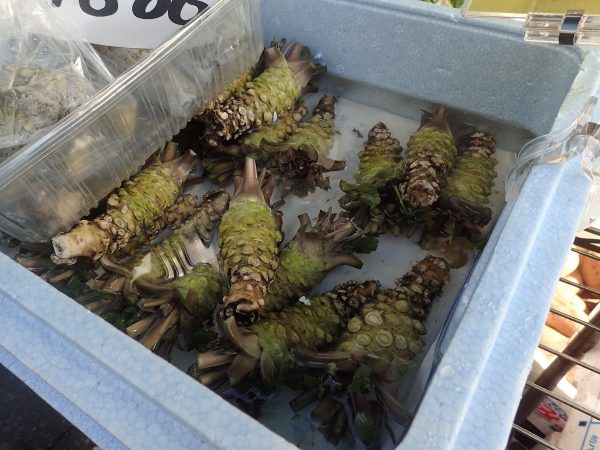
Fresh wasabi — something you can’t find in Hawai‘i.
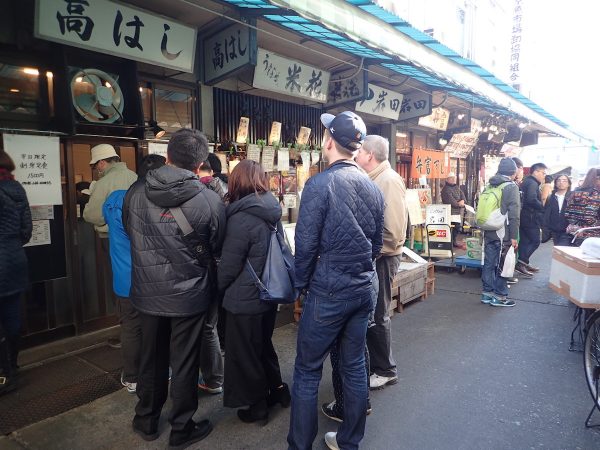
There are sushi restaurants serving the freshest seafood — with lines in the early morning!
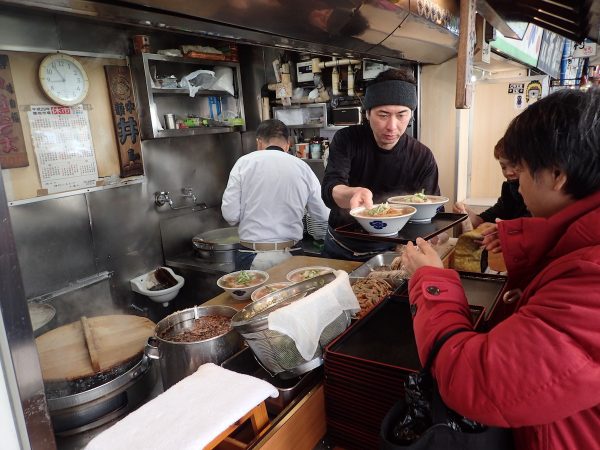
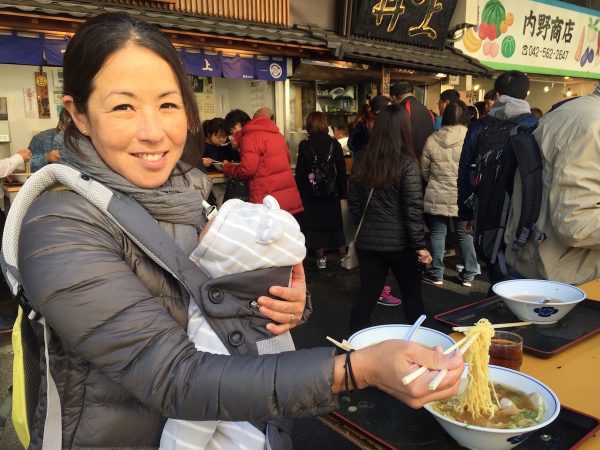
This stand sells freshly made ramen.
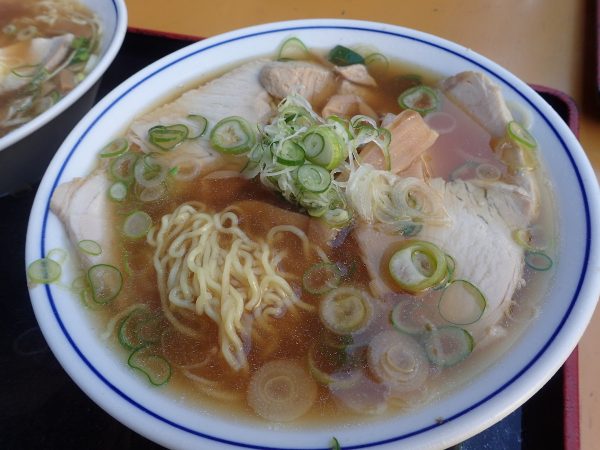
Ramen!
The highlight for me was eating at my favorite
tachigui, or stand-up ramen shop, here. I love the bright and light dashi, house-made noodles and meaty char siu.
Plus, it was cold. So a hot bowl of ramen really hit the spot.
It wasn’t the easiest trip, with lugging diapers and formula and a stroller strapped to my shoulder. The city is full of stairs and narrow alleys, making it challenging to get around. But still, despite all that, we managed to pack in a lot of fun experiences in just a few days.
Too bad Landon won’t remember any of it.