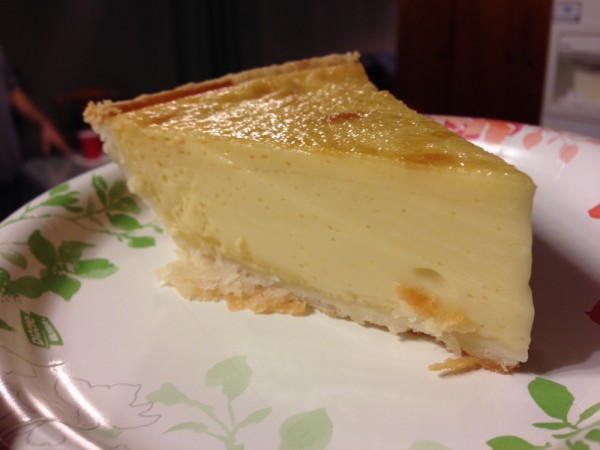
Let’s talk about custard pie

By November 5, 2013 Food

custard

For more than a year now, I’ve been on a very quiet #piequest — on the search of the best pies in Hawaii.

But I’ve been sidetracked — and not by donuts.

The custard pie.

It’s the pie people here talk about the most. It’s the one I get the most questions about. And it turns out, it’s the one that’s the most difficult to perfect.

People have their favorites. Some rave about the flan-like custard pie from Kaneohe Bakery. Others swear by the custard creations from its neighbor, Deluxe Bakery. And still others say Lee’s Bakery in Chinatown, with its slightly eggy custard, is the best, hands down.

Then I got a message from a foodie friend who found out that Nanding’s Bakery in Kalihi — known for its buttery Spanish rolls — serves the original custard pie made by Paul’s Bakery, which people claim was the best before it closed. So of course, I made a point to drive all the way down there just to buy one — OK, two — of its custard pies.

See how crazy we get?

It made me think: what is it about custard pie that gets us talking — and often arguing? I can’t even count the number of conversations I’ve had with the Old Guys I surf with about specifically the custard pie. Who’s got the best? The cheapest? Do you like it eggy or more custard-y? Cold or warm? The list goes on and on.

And on.

Custard pies aren’t just popular in Hawaii. You find them in different cultures — like Chinese (dan tat) and even Portuguese (pasteis de nata). A custard pie is really a mixture of milk, eggs, sugar, salt and vanilla extract. They can come in flavors, too, like pumpkin, lemon and coconut. (I prefer my custard pies plain.) Some recipes call for a few eggs, some a mix of eggs and egg yolks.

Custards, in general, aren’t the easiest to prepare, thanks to all the eggs, which can be easily overcooked or curdled. And custard pies require that delicate balance — not too eggy, not too overcooked, not undercooked, either. It’s tough.

I searched recipes for one that captured that right balance — and maybe this is it.

It’s the master recipe for custard pie from “The Dessert Bible” by Christopher Kimball. Try it — and let me know how it turns out.

Custard Pie
“The Dessert Bible” by Christopher Kimball

(Use your own crust recipe or a pre baked pie shell)

Ingredients for the filling:

2 cups whole milk
1 cup heavy cream
2 T. cornstarch
4 large eggs
2/3 c. granulated sugar
1 1/2 tsp. vanilla extract
1/8 tsp. nutmeg
1/8 tsp. salt

Directions:

Bake pie shell.

Pour the milk and heavy cream into a heavy saucepan. Remove 1/4 cup of the mixture to a small bowl. Add the cornstarch to the bowl and stir thoroughly with a fork until completely dissolved; reserve. Heat the milk and cream in the saucepan over very low heat while the pie shell is browning.

When the pie shell is ready, remove it from the oven. Bring the milk-cream mixture to a simmer and stir in the cornstarch mixture. Place the eggs, sugar, vanilla, nutmeg and salt in a medium bowl and whisk until combined. (Do not do this ahead of time.) Now gently whisk in the hot milk-cream mixture, pouring slowly.

Place pie shell back in oven and carefully pour in filling. Back for 15 to 20 minutes at 400 degrees (pre-heated oven) or until custard is set around the outside but still wobbles a bit in the center 2 inches. Cool for 2 hours before serving.

You Might Also Like

Why are we so addicted to reality TV?

By November 4, 2013 Musings, The Daily Dish

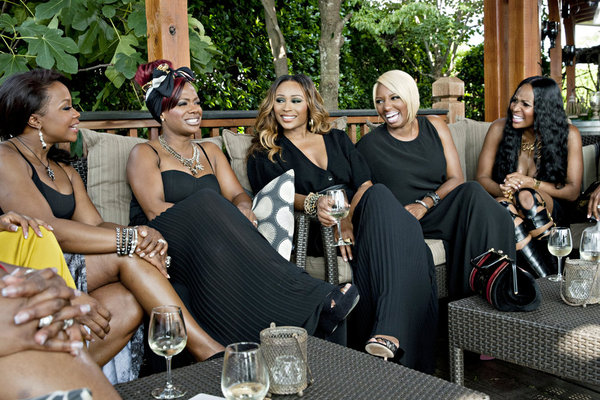
The Real Housewives of Atlanta - Season 6

Has it been six seasons already?

It seems like only yesterday we met NeNe Leakes’ big personality and Kim Zolciak’s wigs.

Now the entire case of Bravo’s mega-hit “The Real Housewives of Atlanta” is back — and stranger than ever.

NeNe re-married her ex-husband, Gregg. Kim is off the show and pregnant with her fifth child. Kandi Burruss is getting married to a guy who worked in production on the show — and her mom isn’t happy about it. And Porsha Stewart, who’s battling her NFL husband Kordell, claims that he might be gay.

It was a pretty heavy episode last night. (I’m sure Bravo execs were happy.)

But it left me thinking, “Why did I just waste an hour of my life watching this?”

A friend of mine posted on his Facebook wall last night — I’m assuming after watching the premiere, too — “An hour and a half spent watching Bravo and I think I’m now 25% dumber.”

It was, well, depressingly true.

There was nothing I gained from watching it except that prenups are awesome and false lashes work miracles.

But Bravo’s onto something.

Apparently, we love reality TV. (Or most of us.) There aren’t many people who have never heard of reality celebs like Omarosa Manigault (“The Apprentice”), Bethenny Frankel (“The Real Housewives of New York”) or Elisabeth Hasselbeck (“Survivor”). These people have become mainstream brands and they have reality TV to thank for that.

Since 2006, Bravo’s “Real Housewives” franchise, to date, has run 40 seasons, totaling more than 580 episodes. It has spawned spinoffs — “Vanderpump Rules,” “Bethenny’s Getting Married,” “Don’t Be Tardy,” “I Dream of NeNe” — with millions of viewers watching with bated breath for the next drama-filled episode.

But why?

I, too, am enthralled with reality TV. When it’s on, I’m glued, my brain shuts off, I turn into a VanderZombie. But like eating a box full of cheap chocolate, I’m never satisfied when it’s done. In fact, I feel a little sick.

Anyone else feel the same way?

Please tell me it’s not just me.

You Might Also Like

#TasteTest: Monkeypod Jams

By October 31, 2013 Food

This is a new recurring feature where I post products I’ve tried — and I think you should try, too. If you’ve got suggestions for me, let me know. I’ll try just about anything.

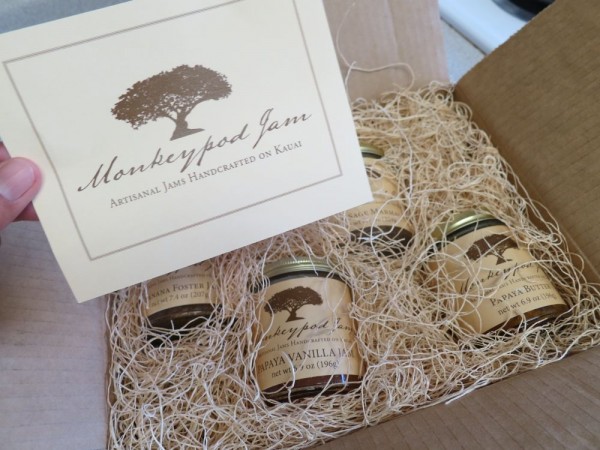
IMG_2881

I’m a sucker for local jams.

There’s nothing like freshly made artisan fruit preserves using local ingredients — and that’s wherever I am. (I brought home several jars of jams and jellies from a street market in Amsterdam this summer.)

So when I first tried the Kauai-made Monkeypod Jams in a Hello Makana box, I knew this was something special.

The name alone — Banana Foster Jam ($10) — won me over.

IMG_2882Monkeypod Jam uses local fruits from sustainable farms on Kauai. The preserves start with whole fruits — whatever’s in season — and are cooked in classic Mauviel copper jam pots specifically designed to make the jam because of their their small size, low profile and even heating properties.

The company also sells such gourmet items as lemon-sage marmalade, mountain apple pepper jelly, papaya vanilla jam and spiced tomato jam. Most can be purchased through its website.

I ate these with just simple crackers and they were delicious. Imagine adding these flavors to thumbprint cookies or atop warm butter rolls.

And look at them — they make great gifts, too.

If you’re interested in Monkeypod Jams and want to sample the flavors, stop by Williams-Sonoma at Ala Moana Center from 9:30 a.m. to 3 p.m. Saturday. There will be new flavors, too, like jaboticaba jelly and starfruit marmalade.

You Might Also Like

5 Qs with surf champ Carissa Moore

By October 29, 2013 Musings, The Daily Dish

photo-43

The first time I saw Carissa Moore surf, she couldn’t have been older than eight — and she was already ripping.

She would paddle out to Queen’s with her dad, Chris, and surf the inside reform section. She was bubbly and sweet and respectful, even though she was already landing airs and 360s and making the rest of us lifelong surfers look like hacks.

Now Moore is 21 and the best female surfer in the world, winning her second 2013 Association of Surfing Professionals Women’s World Title this October in Portugal.

And I’m still riding a 9-foot longboard in three-foot surf.

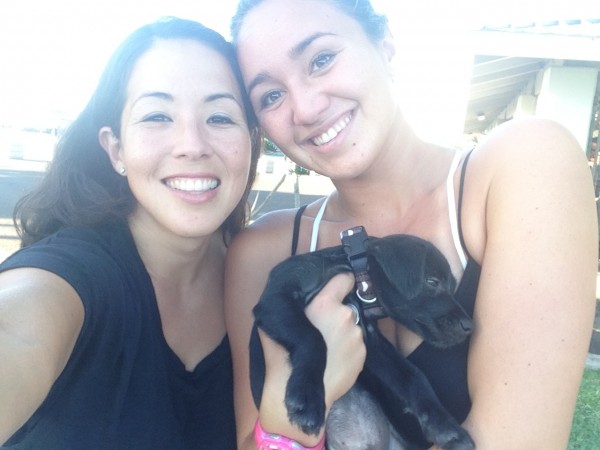
Anyway, I got a chance to catch up with the world champ (and her puppy, Tuffy) now that she’s back in town — and surfing Kewalo’s — for a story for an upcoming issue of HAWAI’I Magazine. And it was nice to see the fame and the glory hasn’t changed her. She’s still that sweet, smiley girl I remember. Just a bit taller.

1. You just turned 21. What did you do for your birthday?

My family totally surprised me. I was planning to spend the day with my dad. But then he drove down to the Sheraton (Waikiki) and my mom and sister came out. I wanted to tear up. We all haven’t been together since I was 10. (Her parents got divorced then.) We went on a canoe ride in Waikiki. It was just very special.

2. I know you started surfing when you were super young. When did you start to really love it?

I always had to be nudged, to be honest. I don’t think I started setting my alarm (to surf) until I was 17. In the early days, I would throw fits about going to the beach. I didn’t like the act of going there, but once I was there, I loved it. I actually loved just spending time with my family.

3. Surf’s up on the North Shore. You like surfing big waves?

I love Haleiwa. On a good northwest swell and it’s six feet, it’s so much fun. But there are definitely times, like when it’s 8- to 10-feet, I’m, like, no thanks. I’ll just cruise on the beach. But I know sometimes I have to challenge myself. You really have to want that and enjoy that to do it. You have to love the adrenaline.

4. If you weren’t surfing, what would you be doing?

If I wasn’t surfing, I’d probably be in school studying to be a teacher. I wanted to be a school teacher forever.

5. What are your favorite places to eat while you’re back at home?

I love the spicy chicken from Gina’s BBQ and Hale Vietnam in Kaimuki is so good. Oh, and we love Koa Pancake House. I order the ham and eggs and I eat my boyfriend’s pancakes. I think every girlfriend does that!

You Might Also Like

Did This: Sailing with Hōkūleʻa

By October 28, 2013 #CatTravels

IMG_4356

I wouldn’t consider myself a full-on ocean person.

Yes, I surf. Yes, I swim. But that’s the extent of my ocean frolicking.

The main reason? I get seasick. I could probably get seasick watching someone else get seasick.

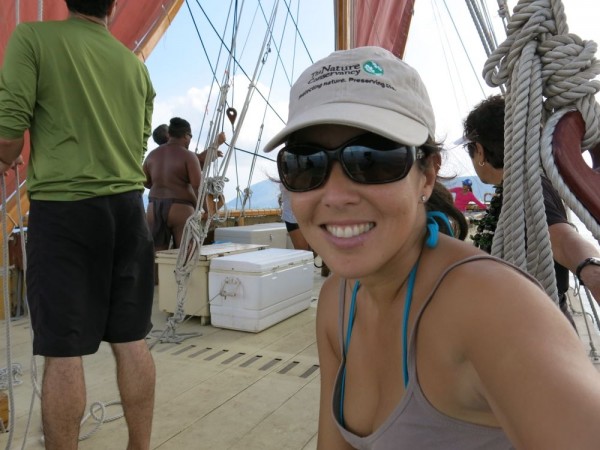
But when the opportunity to sail with the historic Hōkūleʻa came up, I jumped at the chance. Sick or not, I couldn’t pass up the chance to help crew on one of the most culturally significant and important symbols of Hawai‘i.

IMG_4271

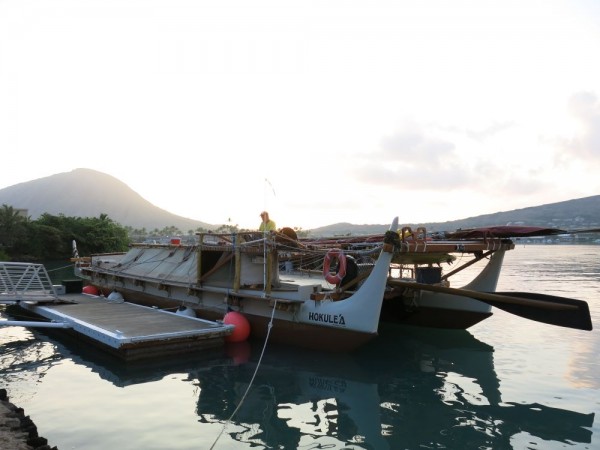
For the past week, the double-hulled sailing canoe was docked at the Hawaii Kai Towne Center (above), where thousands of people — from schoolkids to kupuna — got to climb aboard, tour around and learn about the Hōkūleʻa before it embarks on an ambitious worldwide voyage starting next May.

Sunday’s sail was at the last leg in the Mālama Hawaiʻi statewide sail, where the canoe and its sister, Hikianalia, made 30 stops across the state including to remote spots like Kaho‘olawe and Kalaupapa on Moloka‘i. It was leaving Hawai‘i Kai, stopping in Waikīkī, then heading to Ko Olina, where it will docked for people to visit for another week.

Over the next four years, both canoes will travel to 28 countries and stop at 85 international ports, sailing more than 45,000 nautical miles around the world.

IMG_4305

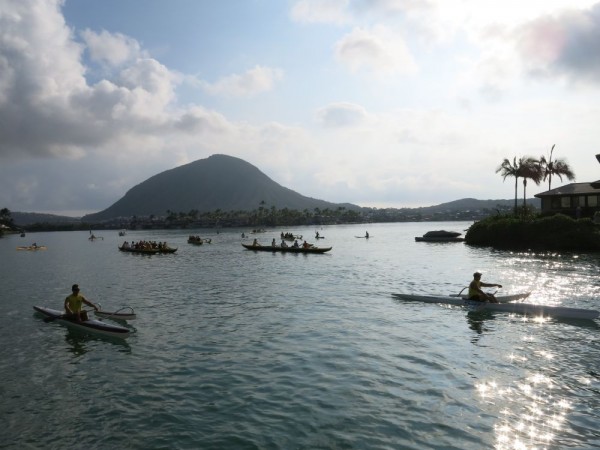
On Sunday it left Hawai‘i Kai (above) with dozens of canoes, boats, kayaks and SUPs to escort her into Maunalua Bay.

They were here, like me, because the Hōkūleʻa means something to them, to our community. It was moving to see how many people turned up that early to meet the canoe and see her out to the open ocean.

IMG_4314

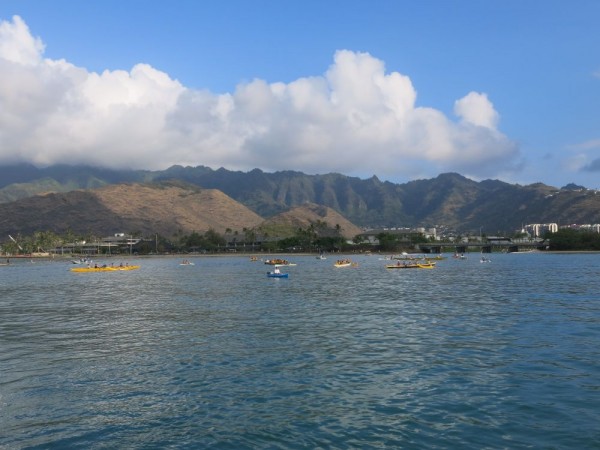
The mission of Hōkūleʻa and this worldwide voyage is navigate toward a healthy and sustainable future for us, for Hawai‘i and for the entire world — what the Polynesian Voyaging Society refers to as Island Earth — through voyaging and new ways of learning.

IMG_4327

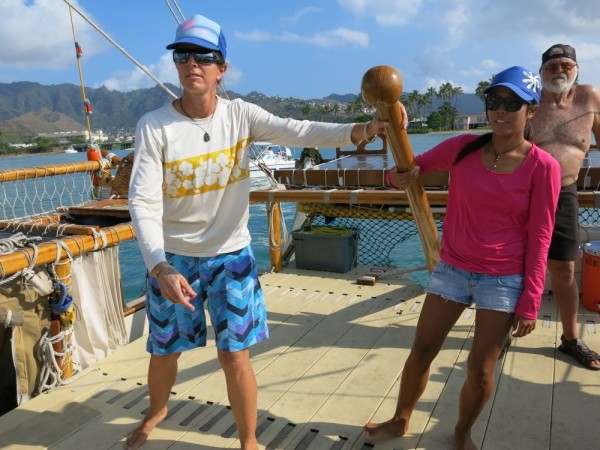
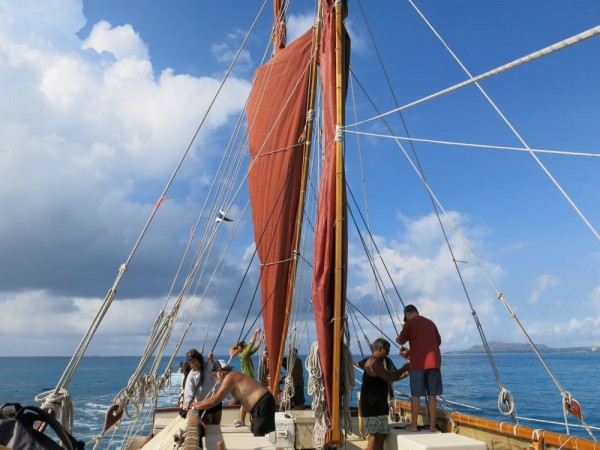
Part of my experience on Sunday was to actually learn what the crew does. There are more than 300 people who will be trained for the four-year-long voyage around the world. (Here are two above.) It takes months of classroom and hands-on learning to train for the voyage.

IMG_4340

It took us more than an hour to set up the masts and sails before we could depart Maunalua Bay and head toward Waikiki. And it took all hands to help. It was really a larger lesson about community, about helping, about the meaning of mālama.

But the winds didn’t cooperate — too light and blowing in the southwestern direction — so we had to call the escort boat to tow the canoe toward the Maritime Education Training Center on Sand Island.

In the meantime, I got sick. Really sick. I sat in the middle of the boat, huddled up in a towel and hoping the sail would be over soon. I was miserable.

And yet, everyone on the boat stopped to talk to me, to rub my back and shoulders, to tell me stories or make me laugh to get my mind off my seasickness. This is what the Hōkūleʻa does — it makes people see the larger picture, to realize that “we” is stronger than “me,” and that we have to live in this world together so why not work together and love each other.

IMG_4376

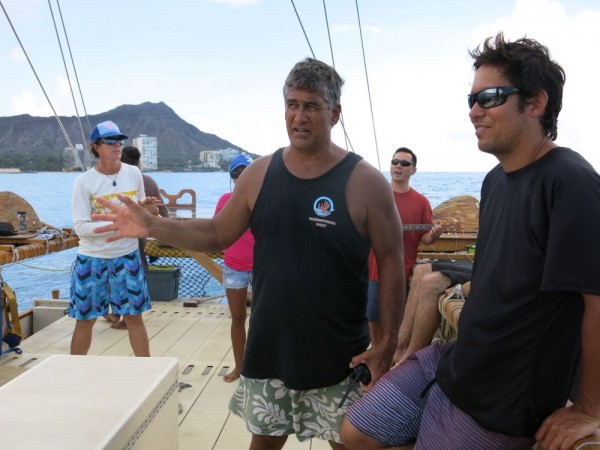
Once we got to Waikīkī, we stopped and drifted a little so the crew could pay its respects to the folks whose ashes had been scattered in these waters. People like Pinky Thompson, Joanne Kahanamoku and Eddie Aikau who were instrumental in Hōkūleʻa, its mission and purpose. Captain and training coordinator Bruce Blackenfeld (shown at left) told us stories about them — a simple reminder that we must always remember and respect the people who came before us.

After we sang “Aloha Oe,” I suddenly felt better. I had already thrown up several times and thought I was going to be sick for the entire sail. But I perked up, and finally I found my sea legs.

IMG_4367

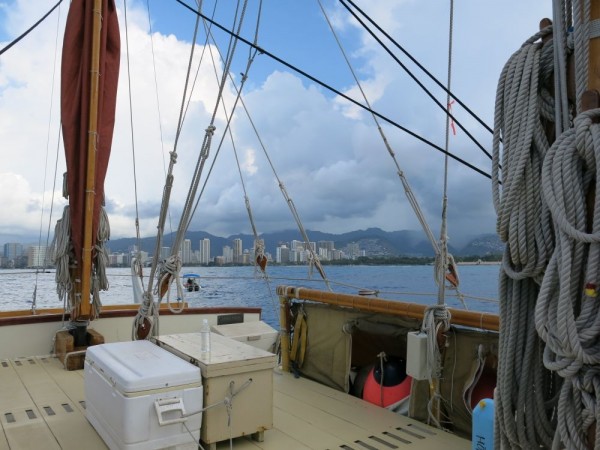
The last push was to the Maritime Education Training Center in Sand Island where Hikianalia was in dry dock and another crew was waiting to jump on Hōkūleʻa and head to Ko Olina. It took about half an hour to get there, and I was glad I felt better — I could actually walk around! — for the last few moments aboard this historic vessel.

It was more than just a great opportunity. It was a lesson in service, in gratitude, in survival (for me), in believing there’s something more and bigger out there and that we are all connected to each other. We live on this island in the middle of the Pacific Ocean, yet we belong to the same Island Earth. And what we do matters. And what we don’t do matters, too.

So let’s do something. Even if it’s something that makes you uncomfortable or, in my case, completely sick. If it matters, do it.

Visit the canoe at the Ko Olina Marina from 3 to 5 p.m. daily through Friday. To learn more about Hōkūleʻa’s historic worldwide voyage, click here.

You Might Also Like