Nothing better than watching the sun set in Kailua-Kona.


 I was really sad when HK Restaurant closed in September after more than 30 years.
No more teri hamburgers, fried noodles or its popular Yum Yum Chicken.
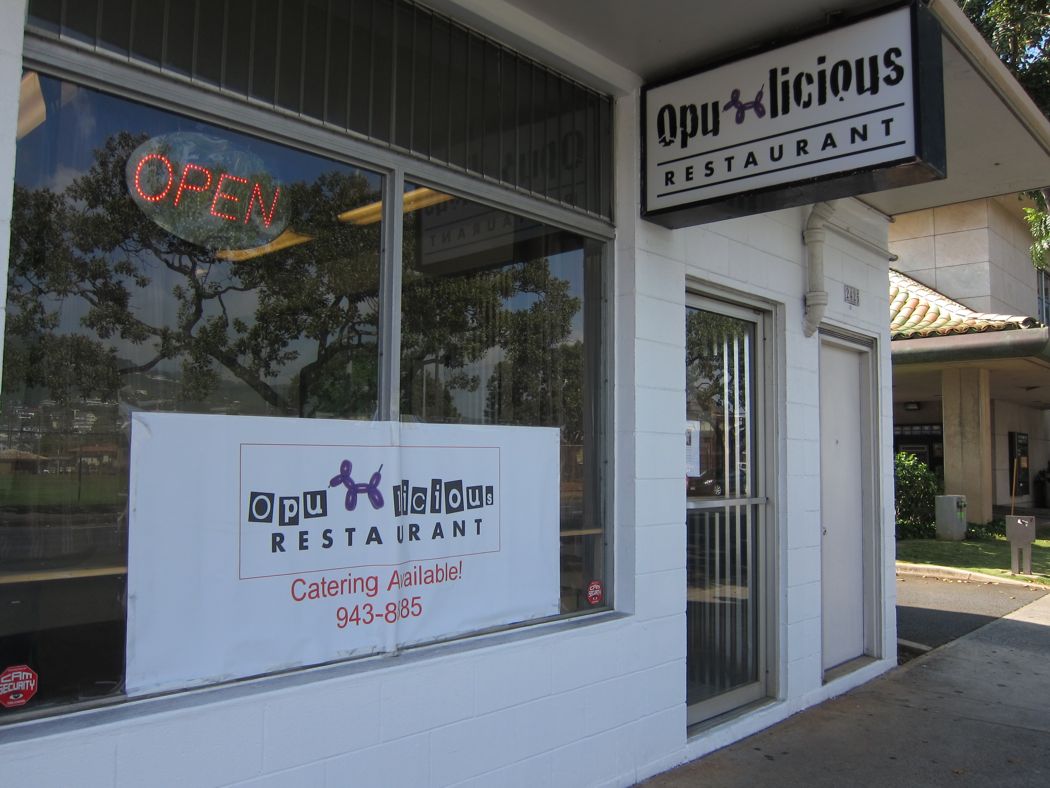
HK’s was one of my go-to spots before UH volleyball games or after the beach. But in its place opened another plate lunch place, this one serving your standard staples — hamburger steak, chicken katsu, beef stew — with a few items you don’t often see at this kind of establishment, including cold ginger chicken, spaghetti with meat sauce, pork and peas, and roast turkey with stuffing.
I read a few unfavorable reviews and wanted to check it out for myself.
Here’s what my recent lunch there looked like:
Opulicious Restaurant, 946 Coolidge St. Hours: 10 a.m.-7:30 p.m. Monday through Saturday, closed Sunday. (808) 943-8885

 I love stationery.
Yes, I’m one of those.
I write letters, I send thank-you notes, I even have a pen pal from second grade.
So of course I was thrilled to hear a new stationery boutique opened in October in Kapahulu. South Shore Paperie is owned by designer (and fashionista in her own right) Stacey Nomura. We headed there yesterday to check it out.
Here’s a peek inside:
South Shore Paperie, Kilohana Square, 1016 Kapahulu Ave. Hours: 9 a.m.-4 p.m. Monday through Thursday, 10 a.m. to 6 p.m. Friday and Saturday, closed Sunday. Phone: (808) 744-8746, www.southshorepaperie.com

Fifteen minutes?
When I heard that’s the amount of time, by an outdated city ordinance, a food truck can park in one place, that just didn’t make sense.
I mean, why even bother? It’s not like a food truck can generate any income, really, in 15 minutes. They can’t even make enough to pay the citation of $500.
The Honolulu City Council will look at upping that time limit to two hours. But is that even worth it, either? And why the time limit?
I’m sure this has something to do with mobile businesses not paying as much — rent, overhead, taxes — as brick-and-mortar shops. And I’m sure they’re seen as threats, especially when these lunch trunks pop up at lunchtime and take away business from nearby restaurants.
I remember talking with a lunch wagon owner who paid a fee to operate on city property. He was upset because other wagons would pull up in parking stalls and sell food — taking away his customers — and without paying the fee he was paying. So he stopped paying it, too, and now drives around, finds an open spot and sets up his business. It’s easier and cheaper.
But what the city should do is help these small, mobile businesses — not hurt them or pit them against each other. Talk to the owners. Find out what they need. Make it work. It will only benefit everyone involved.
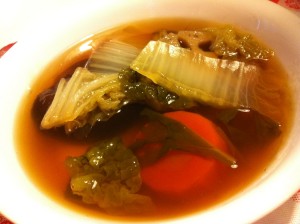 Every New Year’s, our family always eats two things: Hawaiian food and ozoni.
The Hawaiian food tradition started with our neighbors, a Hawaiian family, would kill and imu a pig and make a feast of foods including poi, lau lau, chicken long rice and lomi salmon. They would bring a box full of food for us on New Year’s and we’d take them a whole ham and baked beans.
Then we would eat ozoni soup, a Japanese dish flavored by dashi and contains mochi, leafy veggies, shiitake mushrooms, carrots and daikon. (We don’t put in chicken or pork, like other families.) My mom makes the same ozoni her mother made — and we’re pretty sure grandma learned this from her mom, too.
But what’s the significance for New Year’s?
“I have no idea,” my mom said.
So I did a little Google research. Turns out I can’t get a straight answer anywhere.
The best was the one I found on the Japanese Cultural Center of Hawaii’s website:
A Japanese New Year’s feast may include ozoni (a mochi soup) for strength and prosperity, otoso or ochawith umeboshi (sake or Japanese rice wine with herbs or tea with preserved plum) for good health, kazunoko (herring roe) for fertility, kuromame (black beans with chestnuts) for good health and success, kobumaki (seaweed stuffed with chicken, pork or fish tied with gourd strips) for happiness, kurikinton (mashed sweet potato and chestnuts) for good fortune, renkon (lotus root sliced crosswise) as a symbol of the wheel of life, and konbu (seaweed) for long life. It is believed that eating these special foods at the New Year will bring one good fortune during the year.
Of course, it doesn’t explain WHY ozoni is linked to strength and prosperity. The ingredients are healthy, but the dish doesn’t exemplify wealth. In fact, it uses all the foods easy to find in the harsh winter months, when fresh ingredients are likely scarce.
This made me think about all the New Year’s traditions we do — and probably don’t know why. Here are mine:
• Whatever we do on New Year’s Day is what we’ll do for the rest of the year. I hope that’s not true because I surfed the smallest waves ever. And I filled up the gas tank in the Nissan Murano and it cost me nearly $60.
• When you enter a home, the man is supposed to walk in first. If the woman does, it’s considered bad luck.
• Seeing the first sunrise of the year. I didn’t do it this year, but my girlfriend climbed Makapuu and said it was packed. You could’ve turned on music and it would’ve been a block party in downtown.
Anyone know the significance of these traditions? Or anyone got unique traditions of your own?
I’m getting to the bottom of this!